CareFinder
Web Design, Personalized Recommendations
Client
Framer
Services
Web Design, Personalized Recommendations
Timeline
1 Month
Year
2025
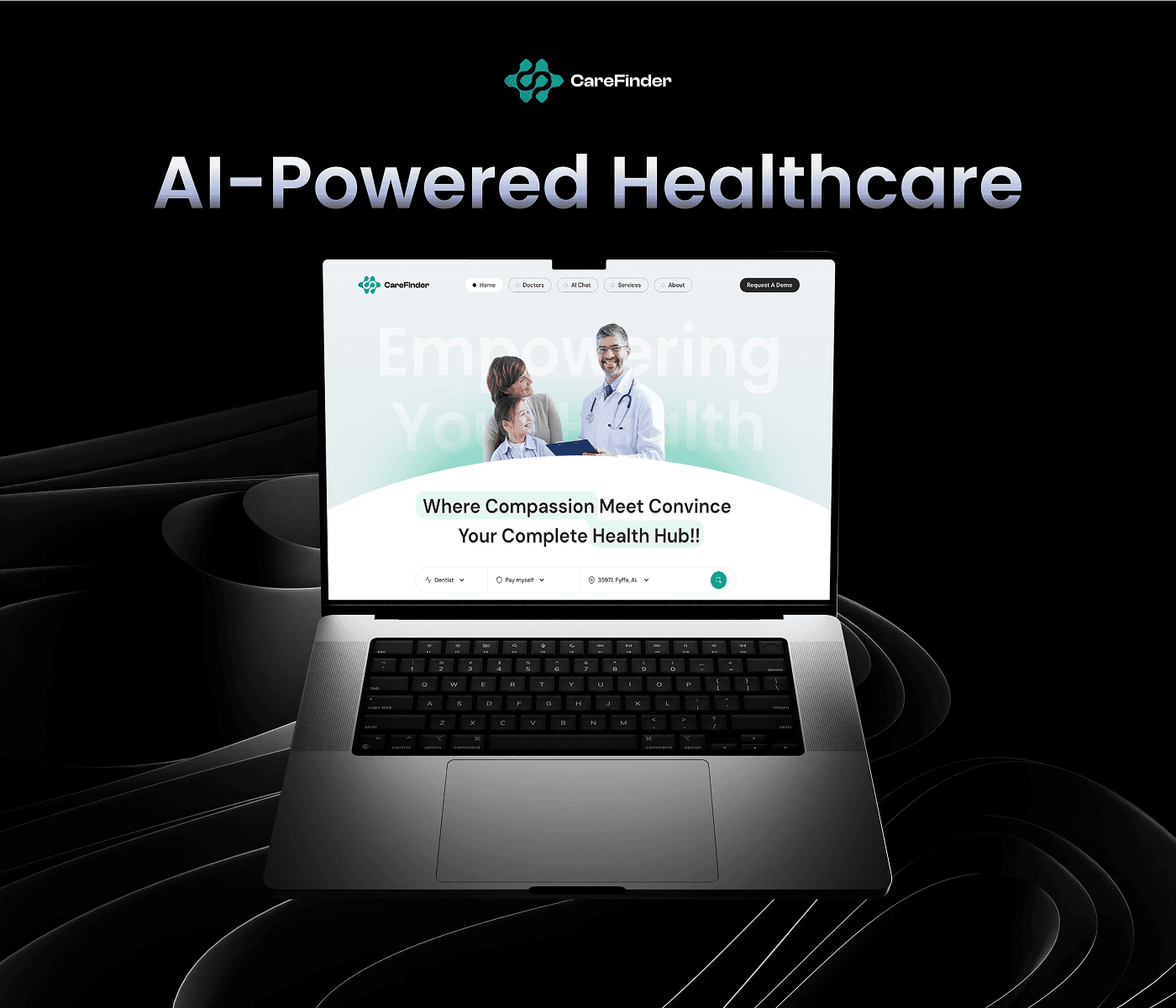
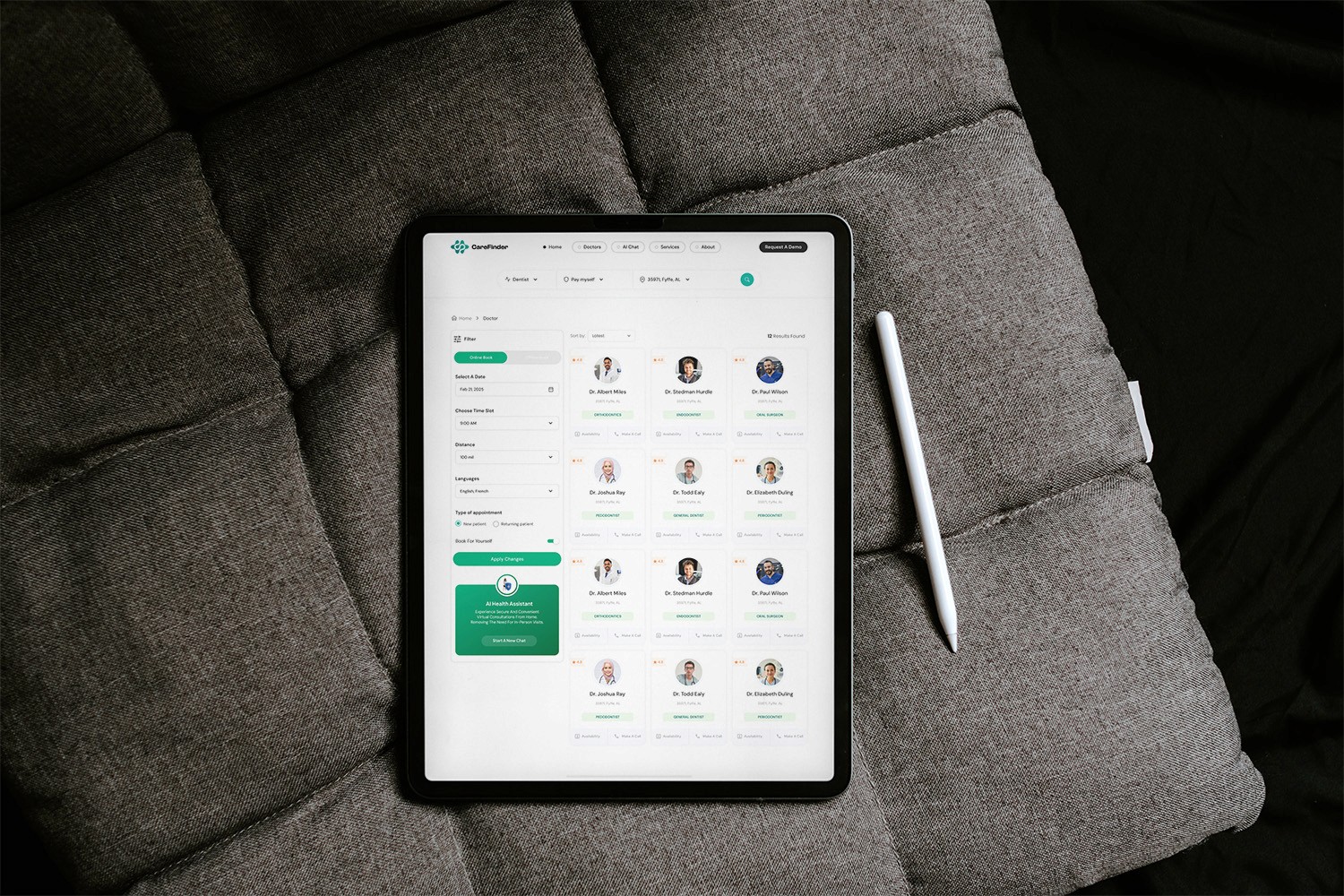
CareFinder is an AI-powered healthcare website built to simplify the way patients access medical services. Many people struggle with the complexity of comparing providers, finding trusted specialists, and booking appointments without confusion. CareFinder addresses these challenges by offering a centralized, intelligent platform that personalizes recommendations, improves search accuracy, and streamlines the entire healthcare journey. The design focuses on clarity, trust, and accessibility, ensuring that patients feel supported at every step.
1. Discover – Understanding the Problem
The project began with research into the challenges patients face when trying to find reliable healthcare options. Many users struggled with scattered information, difficulty comparing providers, and lack of personalized recommendations.
Key Insight: Patients need a centralized, AI-powered solution that connects them with the right care quickly and effectively.
2. Ideate – Crafting Smart Solutions for Care Access
With the problem defined, I brainstormed features that could make healthcare discovery simple and efficient. Wireframes explored search flows, AI-driven recommendations, and provider profiles. Feedback sessions helped refine the most practical and impactful ideas.
Decision: Prioritize a clean interface with AI-driven suggestions to reduce friction in finding healthcare services.
3. Design – Bringing the Concept to Life
Using Figma, I designed an intuitive and modern interface that balances trust, accessibility, and innovation. The design system included clear typography, calming color palettes, and structured layouts to make navigation effortless.
Prototype: Interactive prototypes highlighted core experiences like personalized recommendations, provider search, and appointment booking.
4. Test & Refine – Perfecting the Details
I conducted usability testing with real users to ensure the platform felt clear and trustworthy. Feedback revealed areas for improvement, such as button visibility and content hierarchy.
Final Adjustments: Enhanced contrast, simplified labels, and ensured responsive behavior across all devices.
5. Deliver – Handing Off the Design
The final stage of the project involved preparing a complete package for developers. This included high-fidelity design files, design documentation, a component library, and real-world mockups to illustrate different usage scenarios. By maintaining close collaboration with developers, we ensured that the transition from design to implementation was smooth and efficient. CareFinder was designed to scale, meaning the platform could grow with new features and adapt to evolving healthcare needs.
Conclusion
The result of this process was CareFinder: a patient-first, AI-powered healthcare platform that redefines how people connect with medical providers. By combining smart technology with user-centered design, CareFinder simplifies the healthcare discovery process, reduces time spent searching, and empowers patients with trustworthy recommendations. The platform not only improves access to care but also builds confidence and transparency in the digital healthcare space.
View Case Study On Behance